Nexar One
No rating shown: we have no owner rating for this camera from a source we can cite. Why
The Nexar One is built around connectivity rather than around the camera, and the two design choices that follow are unusual enough to matter. Storage is internal eMMC - 64GB to 512GB depending on the model - and it is neither removable nor upgradeable, so there is no microSD card to corrupt, and equally no card to hand to a police officer or an insurer. Retrieval happens through the app or the cloud. The front camera is a Sony STARVIS IMX415 recording up to 4K at an adaptive 25-30fps on a 140-degree lens; the interior camera is a 2-megapixel GC2053 at 720p on a 160-degree lens with infrared. That 720p interior channel is the lowest-resolution camera in this catalog and it shows. Power is a 3.7V 420mAh lithium-polymer cell and the operating range is 14 to 140 degrees Fahrenheit, both of which argue against leaving it on a windshield in July. Live view, cloud backup, GPS tracking and parking alerts all require the LTE add-on and a Nexar plan.
- Approx. price
- ~$400
- Hot car
- Li-po battery
- Li-po battery, rated to 140°F
- Parking tier
- Buffered
- Hardwire kit optional
Someone who wants footage to appear on a phone automatically and will pay a monthly fee for it.
The description and the pros and cons above are written from published specifications, not from owner reports. Owner sentiment, where we have it, is in its own section below.
What the numbers mean here
The front camera records 3,840 horizontal pixels across a published 140-degree field of view, which is 27.4 pixels per degree — plate-legible at distance. There is no rear channel on this model. How this is calculated, and what it does not tell you.
It runs on a li-po battery. In a device stuck to a windshield that is the part most likely to fail in a hot climate, because a lithium cell in a car that reaches well over 140°F is outside its comfortable range. The maker publishes an operating range of 14°F to 140°F. Supercapacitors and heat.
Keeps a rolling buffer, so the seconds before an impact are saved as well as the impact itself. It is the most useful parking mode and the hungriest. The hardwire kit is a separate purchase, which is the line item people forget when budgeting. What each parking mode records.
Specifications
Manufacturer-published figures, recorded from Nexar’s own product page and a specialist retailer’s spec table. Fields the maker does not publish are omitted rather than guessed.
- Type
- Interior/rideshare
- Channels
- 2
- Front resolution
- 2160p
- Front frame rate
- 30fps
- Front sensor
- Sony STARVIS IMX415
- Front field of view
- 140° (as published)
- HDR
- None
- Power cell
- Li-po battery
- Operating temperature
- 14°F to 140°F
- Parking modes
- buffered, motion
- Hardwire kit
- optional
- GPS
- built-in
- Wi-Fi
- 5 GHz
- LTE / cloud
- Supported
- Max storage
- 512GB eMMC
- CPL filter
- none
- Screen
- None
- Voice control
- No
- Form factor
- wedge
- Mount
- adhesive
- Release year
- 2023
These features need an active paid plan on top of the hardware: remote live view, cloud backup, GPS tracking, live parking alerts.
Features
- Front up to 4K at an adaptive 25-30fps on a Sony STARVIS IMX415
- 720p infrared interior camera at 160 degrees
- Internal eMMC storage from 64GB to 512GB - no microSD card
- Built-in 2.4 and 5GHz Wi-Fi, 10Hz GPS with GLONASS and Galileo
- LTE CAT4 connectivity add-on for live view, cloud backup and alerts
- Screenless body
Where it is strong
- Internal eMMC removes the single most common dash cam failure - a worn-out or corrupted microSD card
- The cloud workflow genuinely works: clips reach your phone without you ever touching the camera
- 10Hz GPS with GLONASS and Galileo is a more capable location package than most cameras carry
- 140 degrees at 4K gives about 27 px per degree on the road-facing camera
Where it gives way
- The interior camera is 720p - the lowest-resolution channel in this catalog by a wide margin
- A 420mAh lithium-polymer cell and a 140 degree Fahrenheit ceiling make it a poor choice for a hot-climate car
- Storage is not removable, so there is no card to hand to an insurer or an officer
- Every feature the product is sold on needs the LTE add-on plus an ongoing subscription
- No HDR published, and no polarizing filter option
What owners say
Summarised from public owner discussion. Nothing here is our own testing.
The Nexar One is sold on a promise - footage appears on your phone and in the cloud without you touching the camera - and owner discussion is dominated by that promise not being kept.
The mount is the most concrete failure. The 3M adhesive lets go once the windshield gets hot, and an owner who mounted it on an externally tinted section of glass in the shade of a drop visor still had it fall off within a day. When they asked, support confirmed there is no alternative mounting option. For a camera that is otherwise a cloud product, falling off the glass is a comprehensive failure.
The cloud story is nearly as bad. Owners say full drives used to be saved automatically and now only clips are, transfers of a five-minute clip have taken twenty-five minutes, and phones drop the connection mid-transfer. Support is app-only, which owners point out is a poor choice when the app is the thing not working.
The one genuine advantage is real: internal storage means no memory card, which removes the single most common failure mode across every other camera here.
What owners like
- Owners who want footage to arrive on a phone without touching the camera are buying the right product category here
- Clips can be created and saved to the cloud manually, which works even when the automatic path does not
- Internal storage removes the memory-card failure mode that dominates complaints about every other camera in this catalog
- The road-facing camera is a real Sony STARVIS sensor on a narrow 140-degree lens, which is a better optical package than the rest of the product suggests
Common complaints
- The 3M adhesive mount fails once the windshield gets hot, and owners report the camera falling off within a day even mounted in shade behind a sun visor
- Nexar offers no mounting alternative to the 3M pad, according to owners who asked support
- The cloud behaviour changed - owners say full drives used to be saved automatically and now only clips are, which is a reduction in what they bought
- Downloading a five-minute clip to the cloud has taken owners twenty-five minutes, and phones drop the camera connection mid-transfer
- Support is only offered through the app, which owners describe as a serious problem given how the app behaves
- Getting footage onto a computer is difficult enough that owners ask for alternatives, which is the opposite of what a cloud camera should deliver
What owners of the Nexar One ask
Does the mount actually hold?
Are full drives saved to the cloud?
There is no memory card - so how do I get footage off it?
How do I get support?
Compare the One
Similar cameras
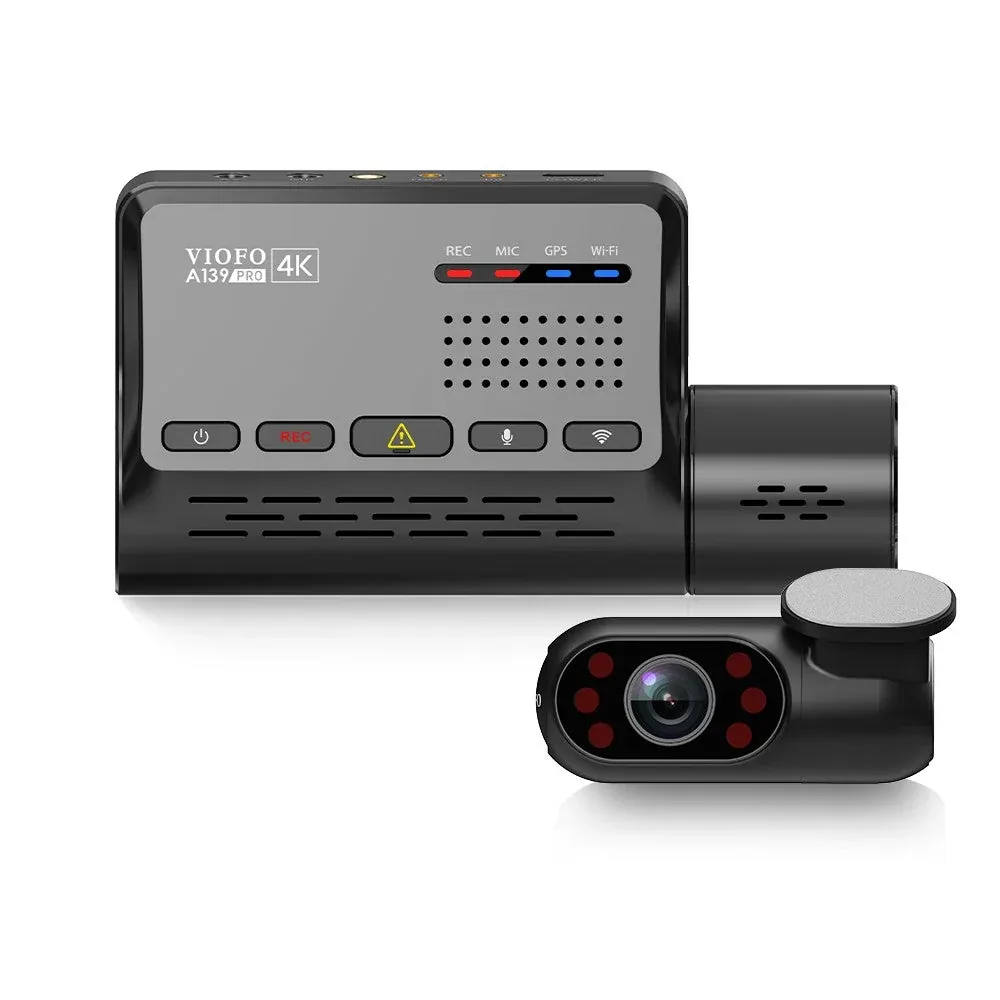
Viofo A139 Pro 2CH IR
- Front px/°
- 27.4
- Front
- 2160p/30
- 140° lens
Thinkware U1000
- Front px/°
- 25.6
- Front
- 2160p/30
- 150° lens
Garmin Dash Cam X310
- Front px/°
- 27.4
- Front
- 2160p/30
- 140° lens