Thinkware U1000
No rating shown: we have no owner rating for this camera from a source we can cite. Why
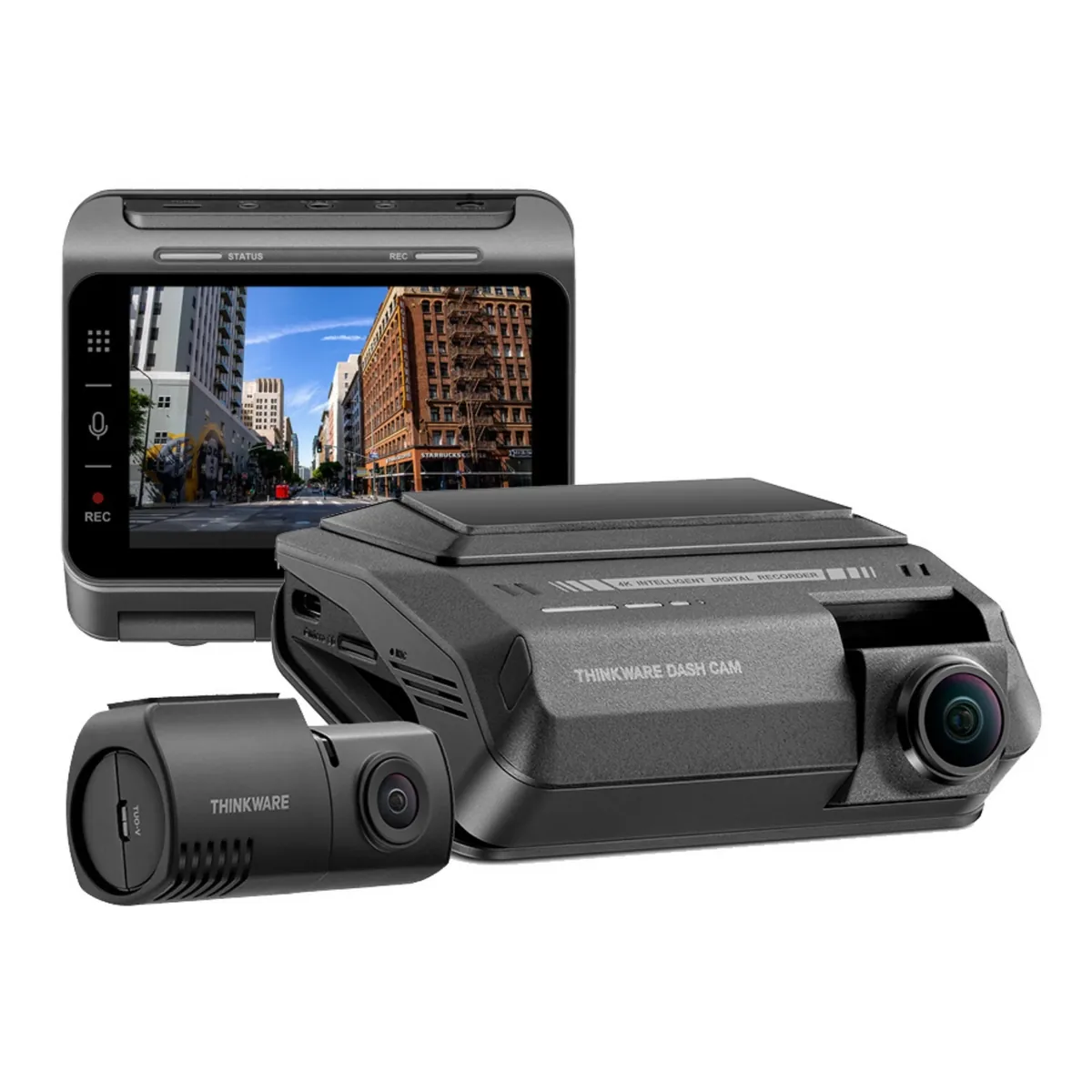
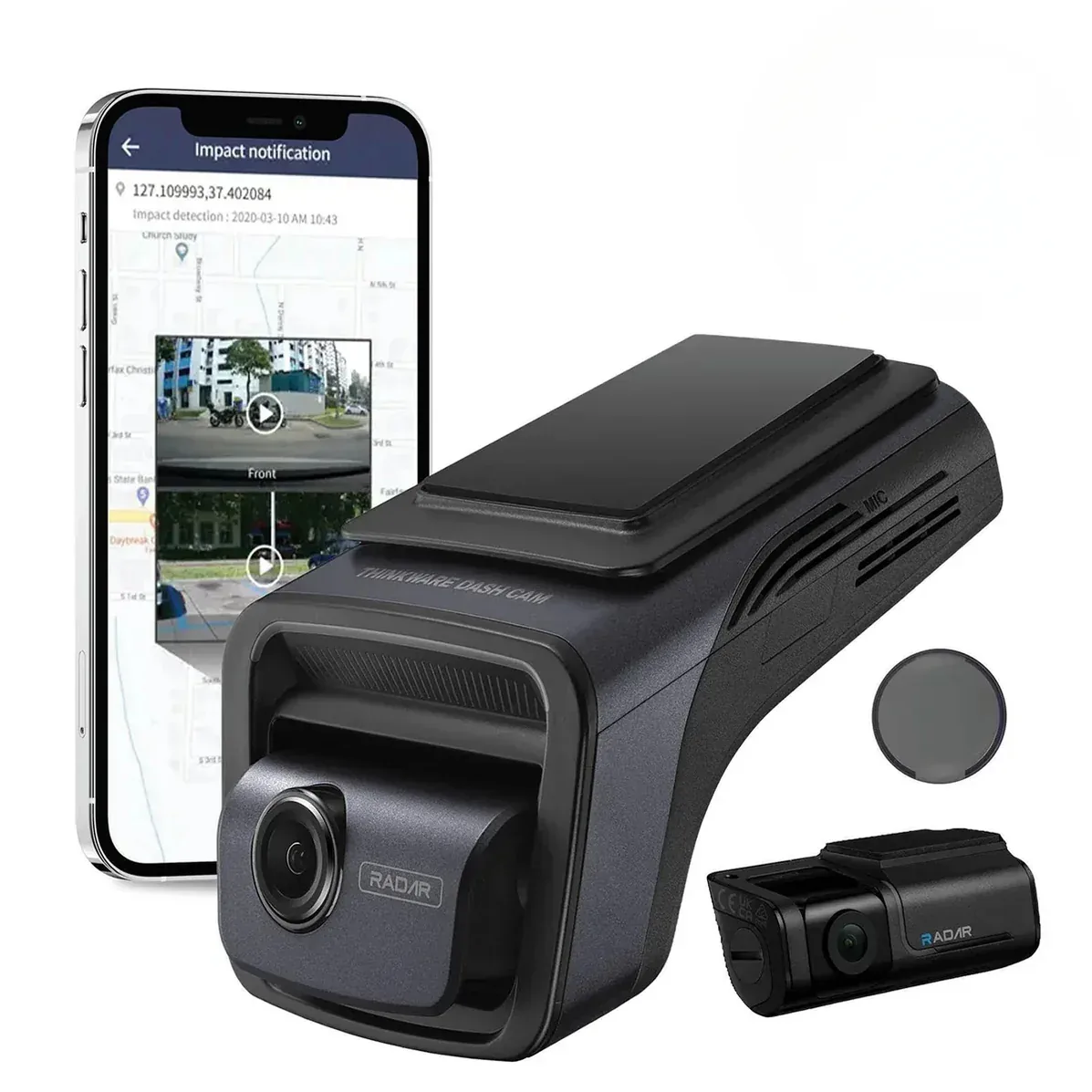
Thinkware's first 4K camera was the U1000, and it is still sold beneath the U3000. Front is 3840x2160 at 30fps on a Sony STARVIS sensor behind a 150-degree lens; rear is 2560x1440 at 156 degrees. It is screenless, wedge-shaped and sits tight to the glass in the way Thinkware's whole line does. The radar that is integrated into the U3000 is available here as an external module, which is a fair trade if you want radar parking without the flagship price - you accept a second small box wired near the camera. Otherwise it offers the same set of parking behaviours: buffered, time-lapse, motion and, with the module, radar. The operating range is Thinkware's usual 14 to 140 degrees Fahrenheit, which is on the narrow side, and the card ceiling is 256GB. Cloud features go through an LTE module and a subscription. The most useful thing about it in 2026 is the price gap to the U3000, which is substantial for optics that are close.
- Approx. price
- ~$400
- Hot car
- Supercapacitor
- Supercapacitor, rated to 140°F
- Parking tier
- Radar-buffered
- Hardwire kit optional
Thinkware's radar parking behaviour without paying flagship money.
The description and the pros and cons above are written from published specifications, not from owner reports. Owner sentiment, where we have it, is in its own section below.
What the numbers mean here
The front camera records 3,840 horizontal pixels across a published 150-degree field of view, which is 25.6 pixels per degree — plate-legible at distance. The rear channel manages 16.4, so it is the less detailed of the two. How this is calculated, and what it does not tell you.
It runs on a supercapacitor rather than a lithium cell, so there is no battery to swell in a car parked in summer sun — the classic way a windshield-mounted camera dies. The maker publishes an operating range of 14°F to 140°F. Supercapacitors and heat.
Radar notices movement near the car and wakes the camera before anything touches it, so the approach is recorded without leaving the camera running all night. The hardwire kit is a separate purchase, which is the line item people forget when budgeting. What each parking mode records.
Specifications
Manufacturer-published figures, recorded from Thinkware’s own product page and a specialist retailer’s spec table. Fields the maker does not publish are omitted rather than guessed.
- Type
- Dual-channel
- Channels
- 2
- Front resolution
- 2160p
- Front frame rate
- 30fps
- Front sensor
- Sony STARVIS
- Front field of view
- 150° (as published)
- Rear resolution
- 1440p
- Rear sensor
- Sony STARVIS
- HDR
- HDR
- Power cell
- Supercapacitor
- Operating temperature
- 14°F to 140°F
- Parking modes
- buffered, time-lapse, radar, motion
- Hardwire kit
- optional
- GPS
- built-in
- Wi-Fi
- 5 GHz
- LTE / cloud
- Supported
- Max storage
- 256GB microSD
- CPL filter
- optional
- Screen
- None
- Voice control
- No
- Form factor
- wedge
- Mount
- adhesive
- Release year
- 2020
These features need an active paid plan on top of the hardware: remote live view, cloud backup, GPS tracking.
Features
- 4K front at 30fps, 1440p rear
- Optional external radar module for Energy Saving Parking Mode 2.0
- Supercapacitor power
- Built-in 5GHz Wi-Fi and GPS; cloud via an optional LTE module
- Screenless wedge body, microSD to 256GB
Where it is strong
- Radar parking mode available as a module rather than only on the flagship
- 4K front and 1440p rear for meaningfully less than the U3000
- Supercapacitor power and Thinkware's flat, screenless install
- A mature model with years of firmware behind it
Where it gives way
- The radar module is a separate purchase and a second box to mount and wire
- The original STARVIS sensor is a generation behind the STARVIS 2 cameras at this price
- 14 to 140 degrees Fahrenheit operating range and a 256GB card ceiling
- No voice control, no screen, and cloud features need an LTE module plus a plan
What owners say
Summarised from public owner discussion. Nothing here is our own testing.
The U1000 has been around long enough that owners have a settled view of it: a great device, a little overpriced, bought for the parking mode. The discovery that pleases people most is the OBD-II connector, which unlocks the full parking feature set without hardwiring and which several owners did not realise was an option until after they had planned a fuse-box install.
Reliability reports pull in both directions. One owner had a unit die with power issues at sixteen months; another reports a firmware update fixing a manual-record fault and no trouble since. Battery drain is the other theme, including a car left for four weeks that came back flat - which is a parking-mode setting question as much as a camera one.
Check the rear camera's orientation after installation - that is the tip owners pass around. It has come back upside down from professional installs more than once, and it is a two-minute fix in the app if you notice.
What owners like
- Owners rate it a great device and the parking mode is the reason, particularly with the radar module fitted
- The OBD-II connector is simpler than hardwiring and unlocks the same parking features, which owners discover with relief
- A firmware update fixed a manual-record button fault for one owner and the camera has been trouble-free since, which is the kind of support record that builds confidence
- Long enough on the market that owners have worked out the quirks, unlike the newer models above it
Common complaints
- Battery drain after four to five months of ownership is reported, including a car left for four weeks that came back flat
- Owners describe it as a little overpriced for what it does, particularly next to the newer Q1000
- A unit died with power issues after sixteen months for one owner, which is short for a camera at this price
- Card compatibility is unclear enough that owners ask other owners what size and brand actually work
- Rear camera orientation has come back upside down from a professional install, which is a setup trap rather than a fault
What owners of the Thinkware U1000 ask
Hardwire kit or OBD-II cable?
Will it drain my battery if I leave the car for weeks?
Is the radar module worth it?
Why is my rear camera upside down?
Compare the U1000
Similar cameras
Thinkware ARC900
- Front px/°
- 26.1
- Front
- 2160p/30
- 147° lens
Thinkware Q1000
- Front px/°
- 16.4
- Front
- 1440p/30
- 156° lens
Thinkware U3000 2CH
- Front px/°
- 24.3
- Front
- 2160p/30
- 158° lens