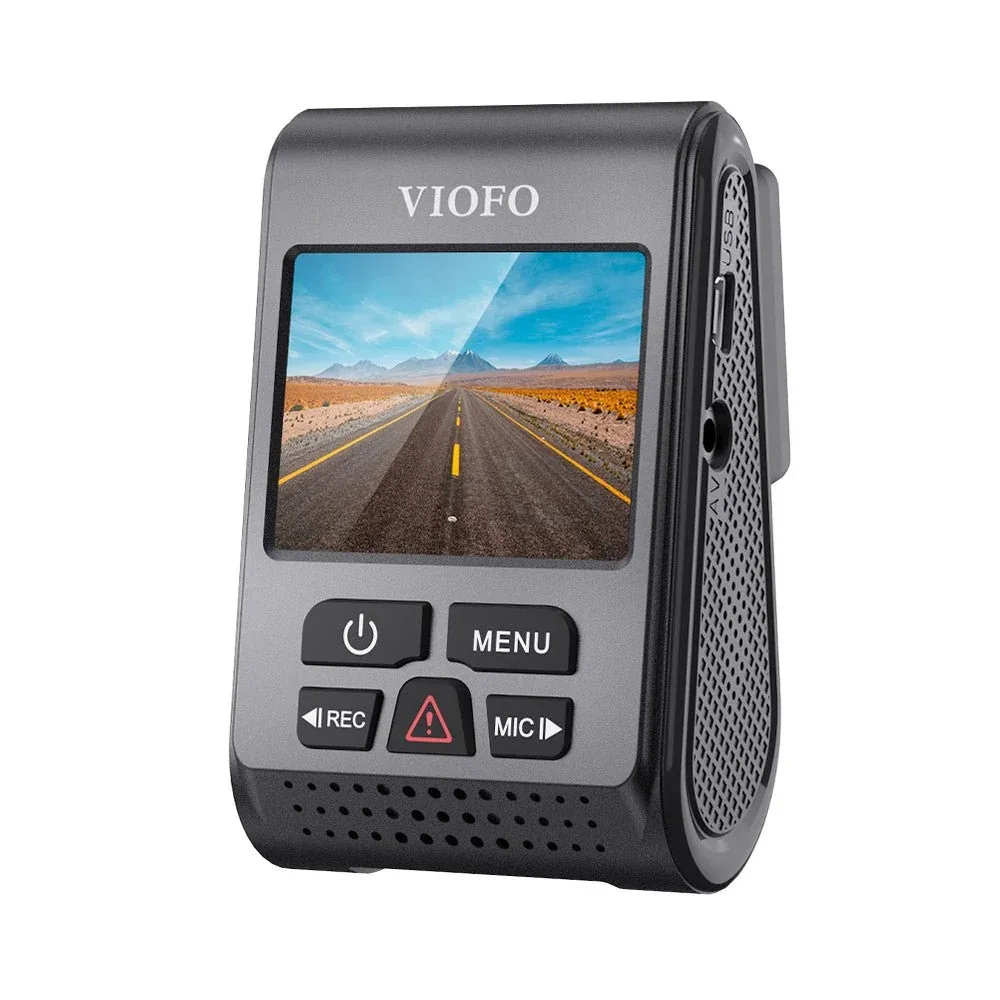
Viofo A119 V3
No rating shown: we have no owner rating for this camera from a source we can cite. Why
The A119 V3 is the camera that built Viofo's reputation and it is still on sale largely unchanged. Its distinguishing trick is the sensor aspect ratio: it records 2560x1600 rather than the usual 2560x1440, which is a taller frame than everything around it. In practice that extra 160 lines of height buys you traffic lights at an intersection you are stopped at, and overhead signage, rather than more road. The optical package is a 5MP Sony STARVIS IMX335 behind an f/1.6 lens quoted at 140 degrees. What it does not have is the connectivity everything newer takes for granted: there is no Wi-Fi, so getting footage off it means pulling the card, and no voice control. The GPS logger and the 2-inch screen are built in, power is a supercapacitor with the usual -4 to 149 degree Fahrenheit rating, and parking modes work with the older mini-USB HK3 hardwire cable rather than the Type-C kits the rest of the current line uses. It is the honest budget answer for someone who will happily carry a card reader to the computer.
- Approx. price
- ~$140
- Hot car
- Supercapacitor
- Supercapacitor, rated to 149°F
- Parking tier
- Buffered
- Hardwire kit optional
A cheap, proven front camera for someone who does not mind pulling the card to get footage.
The description and the pros and cons above are written from published specifications, not from owner reports. Owner sentiment, where we have it, is in its own section below.
What the numbers mean here
The front camera records 2,560 horizontal pixels across a published 140-degree field of view, which is 18.3 pixels per degree — plate-legible close in. There is no rear channel on this model. How this is calculated, and what it does not tell you.
It runs on a supercapacitor rather than a lithium cell, so there is no battery to swell in a car parked in summer sun — the classic way a windshield-mounted camera dies. The maker publishes an operating range of -4°F to 149°F. Supercapacitors and heat.
Keeps a rolling buffer, so the seconds before an impact are saved as well as the impact itself. It is the most useful parking mode and the hungriest. The hardwire kit is a separate purchase, which is the line item people forget when budgeting. What each parking mode records.
Specifications
Manufacturer-published figures, recorded from Viofo’s own product page and a specialist retailer’s spec table. Fields the maker does not publish are omitted rather than guessed.
- Type
- Single-channel
- Channels
- 1
- Front resolution
- 1600p
- Front frame rate
- 30fps
- Front sensor
- Sony STARVIS IMX335
- Front field of view
- 140° (as published)
- Front aperture
- f/1.6
- HDR
- HDR
- Power cell
- Supercapacitor
- Operating temperature
- -4°F to 149°F
- Parking modes
- buffered, time-lapse, low-bitrate, motion
- Hardwire kit
- optional
- GPS
- built-in
- Wi-Fi
- None
- LTE / cloud
- None
- Max storage
- 256GB microSD
- CPL filter
- optional
- Screen
- 2.0-inch
- Voice control
- No
- Form factor
- wedge
- Mount
- adhesive
- Release year
- 2020
Features
- 2560x1600 at 30fps - a taller frame than 1440p cameras
- Sony STARVIS IMX335 with an f/1.6 seven-element glass lens
- Built-in GPS logger and a 2-inch review screen
- Supercapacitor power, -4 to 149 degrees Fahrenheit
- Buffered, time-lapse, low-bitrate and motion parking with the mini-USB HK3 cable
- microSD cards up to 256GB
Where it is strong
- The 2560x1600 sensor crop catches traffic lights and overhead signs that 16:9 cameras cut off
- Years of firmware maturity - this is the least surprising camera in the catalog
- Supercapacitor and a wide temperature rating at a price where lithium cells are normal
- Costs about a third of the flagship and gives up less image quality than the price gap suggests
Where it gives way
- No Wi-Fi at all: every clip you want means unplugging the camera or pulling the microSD card
- No voice control, and the menus are button-driven
- Caps out at a 256GB card, which is tight for continuous 1600p recording
- Uses the older mini-USB hardwire cable, so it does not share kits with the current Type-C line
- Original STARVIS rather than STARVIS 2 - noticeably noisier on unlit roads than the newer minis
What owners say
Summarised from public owner discussion. Nothing here is our own testing.
The A119 V3 is the camera that built Viofo's reputation and owner discussion reflects that: people who have had one for years recommend it for simplicity, and people who want an app do not buy it. The taller 1600-line frame gets specific praise for catching traffic lights at an intersection you are stopped at, which is a real advantage nobody advertises.
Its failure modes are well documented because so many have been sold. The two that dominate are a camera that will not wake after a cold night, and a late-life pattern of double-beeping with recordings that die after ten to fifteen seconds. Owners work through cards, GPS mounts and cables before concluding the unit itself is finished - typically several years in, which is a fair innings but worth expecting.
Cards are the other recurring theme. This camera is hard on them; owners treat a high-endurance card as a wear item and reformat regularly, and at least one had a premium endurance card die inside three months. If you hardwire it, be deliberate about whether the mini-USB goes to the camera or to the GPS mount, because getting that wrong is what produces the battery-drain reports.
What owners like
- The camera longtime owners name when someone asks for simplicity and reliability rather than features
- Several owners report years of uneventful service before anything went wrong, which is a longer track record than most of the catalog has
- Owners who do not want an app at all treat the absence of Wi-Fi as a feature - the card comes out, the files are there
- The taller 2560x1600 frame gets credited for catching traffic lights and overhead signage that 16:9 cameras cut off
- Cheap enough that owners routinely buy a second one for another car in the household
Common complaints
- The most reported failure is the camera refusing to start after a cold night, which owners see months or years into ownership and which usually signals the power cable or the supercapacitor
- A widespread late-life symptom is incessant double-beeping with recordings that stop after ten to fifteen seconds; owners chase it through cards, GPS mounts and power cables and often end up replacing the camera
- Memory cards fail in it often enough that owners treat a high-endurance card as a consumable - one reports a Samsung Pro Endurance dying inside three months
- Hardwiring is confusing because the mini-USB can go into the camera or into the GPS mount, and owners who choose wrong find the battery draining after a day or two despite the cut-off box
- No Wi-Fi means every clip needs the card pulled, which owners who came from a connected camera find genuinely annoying
What owners of the Viofo A119 V3 ask
Why won't my A119 V3 turn on after a cold night?
What does the constant double-beeping mean?
Where does the mini-USB go when hardwiring?
Does it have Wi-Fi?
Compare the A119 V3
Similar cameras
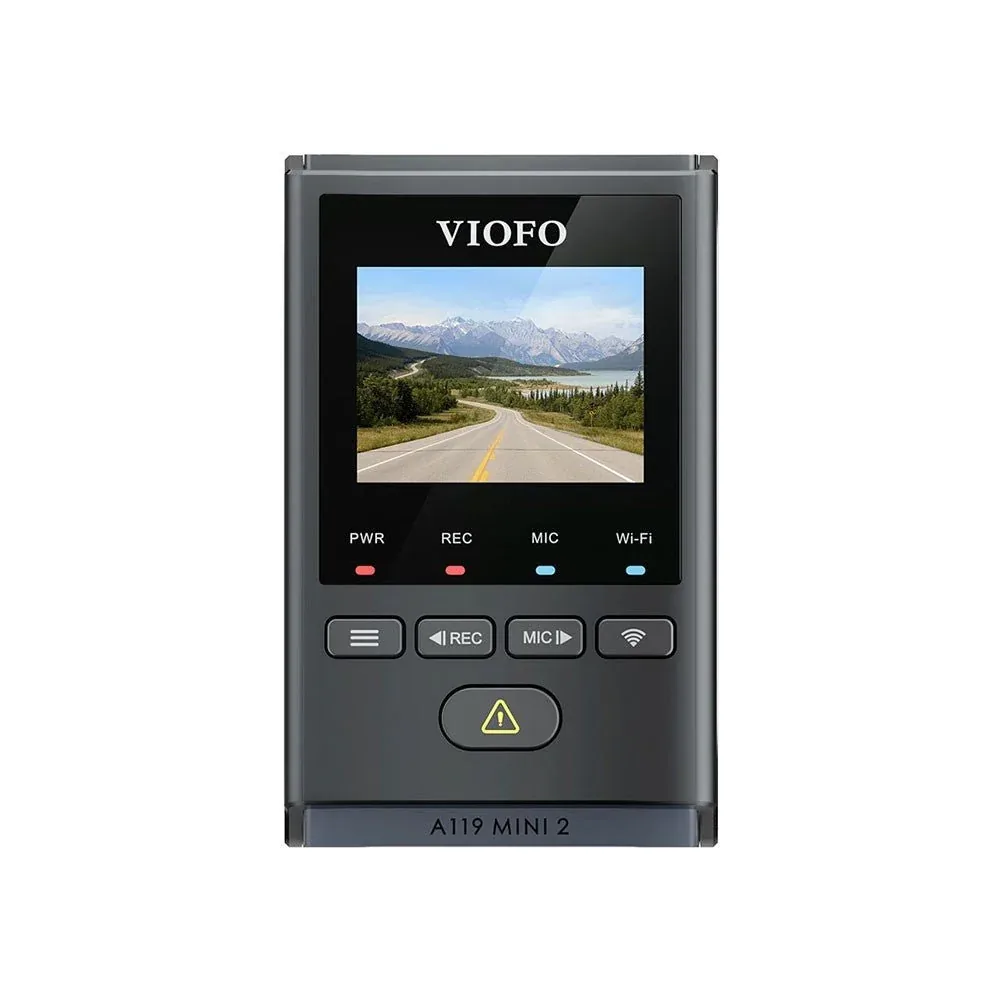
Viofo A119 Mini 2
- Front px/°
- 18.3
- Front
- 1440p/60
- 140° lens
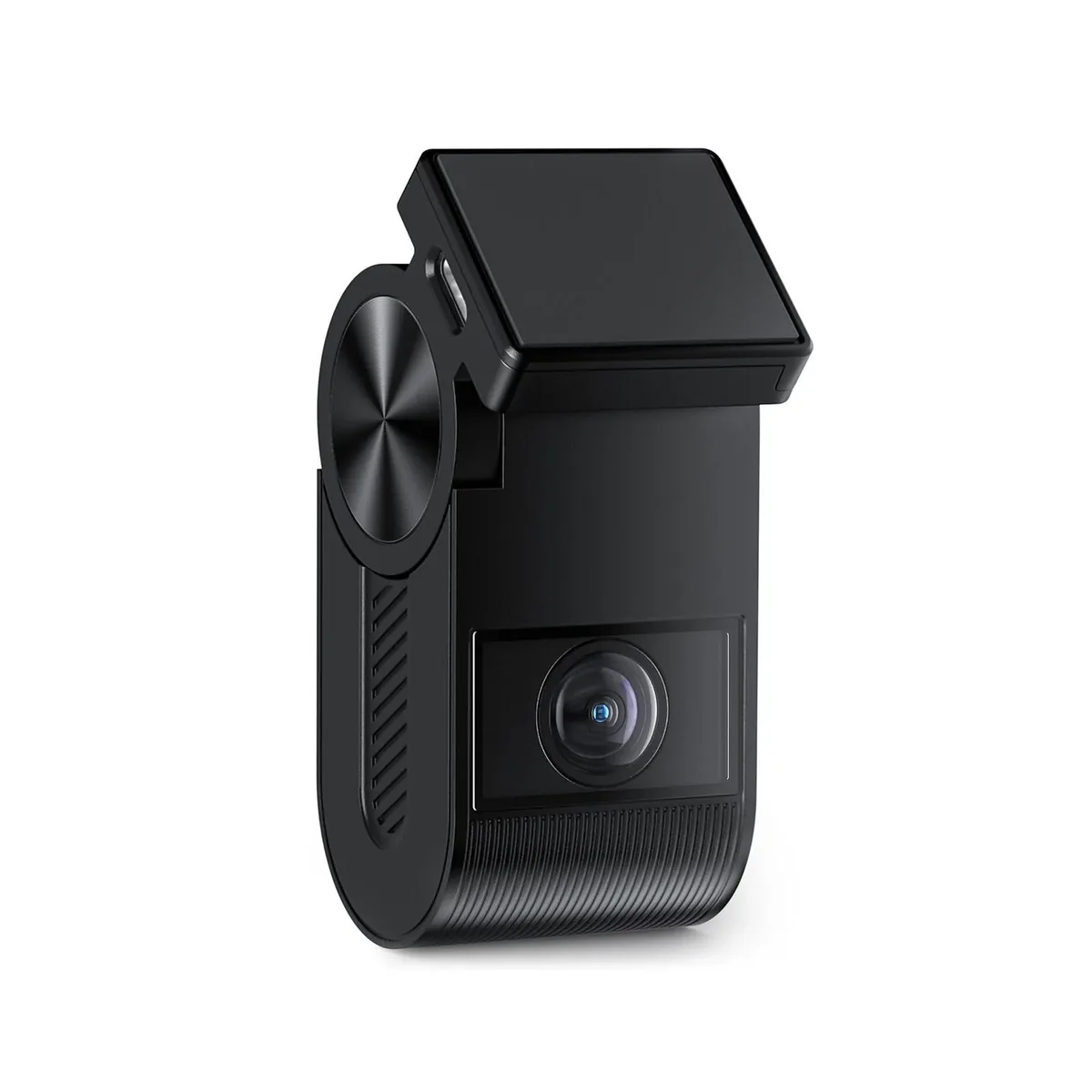
Viofo VS1 Mini
- Front px/°
- 18.3
- Front
- 1440p/30
- 140° lens
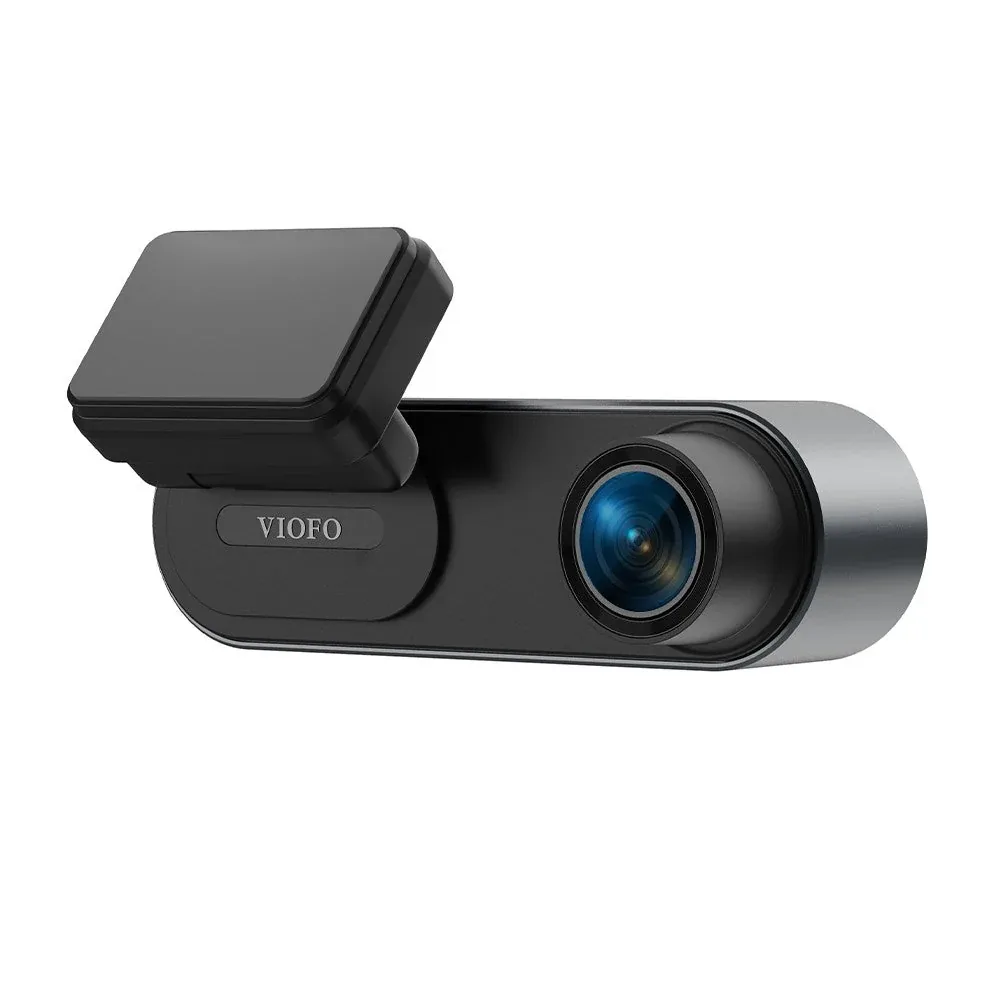
Viofo WM1
- Front px/°
- 19
- Front
- 1440p/30
- 135° lens