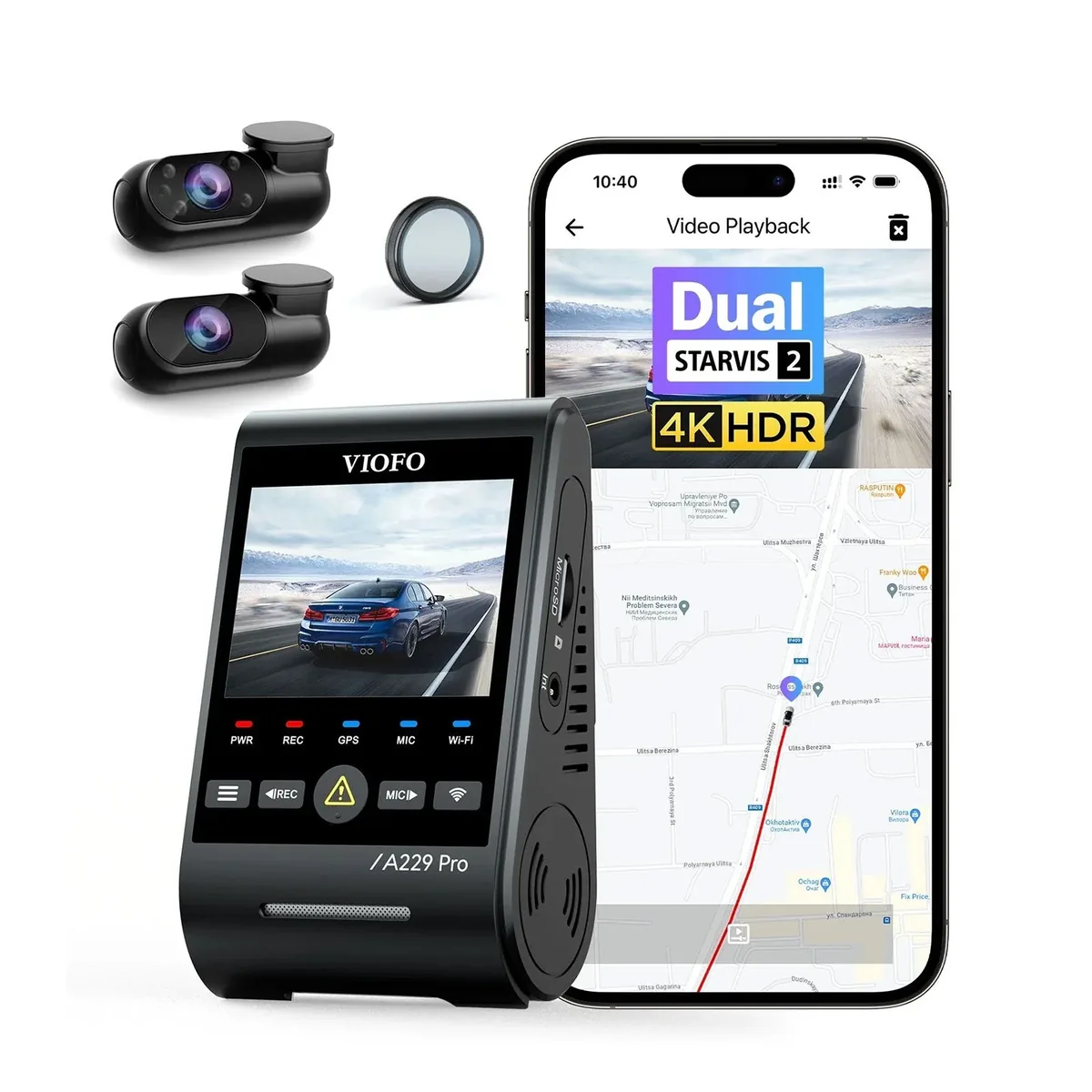
Viofo A229 Pro 3CH
No rating shown: we have no owner rating for this camera from a source we can cite. Why
The three-channel A229 Pro adds a 1080p infrared cabin module on a 150-degree f/1.8 lens to the 4K-front, 2K-rear pairing, which is the configuration rideshare and delivery drivers actually need. All three channels run HDR independently, so a passenger lit by a phone screen and a road lit by headlights are exposed separately instead of averaging into mush. The cabin module's infrared LEDs mean the interior records in usable monochrome with every light in the car off. It is worth being clear about what three channels cost: everything writes to the same microSD card, so the 512GB ceiling that is comfortable for two channels becomes a real constraint here, and loop length shortens accordingly. The modules hang off the front unit on thin cables, which is a longer, fiddlier install than a two-channel kit. Supercapacitor power to 149 degrees Fahrenheit, 5GHz Wi-Fi, built-in GPS, voice control and the separately sold HK4 hardwire kit for parking are all shared with the rest of the A229 line.
- Approx. price
- ~$380
- Hot car
- Supercapacitor
- Supercapacitor, rated to 149°F
- Parking tier
- Buffered
- Hardwire kit optional
Drivers who need the road ahead, the road behind and the cabin all on one card.
The description and the pros and cons above are written from published specifications, not from owner reports. Owner sentiment, where we have it, is in its own section below.
What the numbers mean here
The front camera records 3,840 horizontal pixels across a published 140-degree field of view, which is 27.4 pixels per degree — plate-legible at distance. The rear channel manages 16, so it is the less detailed of the two. How this is calculated, and what it does not tell you.
It runs on a supercapacitor rather than a lithium cell, so there is no battery to swell in a car parked in summer sun — the classic way a windshield-mounted camera dies. The maker publishes an operating range of -4°F to 149°F. Supercapacitors and heat.
Keeps a rolling buffer, so the seconds before an impact are saved as well as the impact itself. It is the most useful parking mode and the hungriest. The hardwire kit is a separate purchase, which is the line item people forget when budgeting. What each parking mode records.
Specifications
Manufacturer-published figures, recorded from Viofo’s own product page and a specialist retailer’s spec table. Fields the maker does not publish are omitted rather than guessed.
- Type
- Triple-channel
- Channels
- 3
- Front resolution
- 2160p
- Front frame rate
- 30fps
- Front sensor
- Sony STARVIS 2 IMX678
- Front field of view
- 140° (as published)
- Front aperture
- f/1.8
- Rear resolution
- 1440p
- Rear sensor
- Sony STARVIS 2 IMX675
- Interior resolution
- 1080p
- HDR
- HDR
- Power cell
- Supercapacitor
- Operating temperature
- -4°F to 149°F
- Parking modes
- buffered, time-lapse, low-bitrate, motion
- Hardwire kit
- optional
- GPS
- built-in
- Wi-Fi
- 5 GHz
- LTE / cloud
- None
- Max storage
- 512GB microSD
- CPL filter
- optional
- Screen
- 2.4-inch
- Voice control
- Yes
- Form factor
- wedge
- Mount
- adhesive
- Release year
- 2023
Features
- Front 4K HDR, rear 1440p HDR, interior 1080p HDR - all three exposed independently
- Infrared cabin module on a 150-degree lens
- Sony STARVIS 2 front and rear, STARVIS IMX307 interior
- 5GHz Wi-Fi, built-in GPS, Bluetooth, voice control
- Supercapacitor, -4 to 149 degrees Fahrenheit
- 2.4-inch screen, microSD to 512GB shared across all three channels
Where it is strong
- Independent HDR on all three channels, which matters most in the cabin where the lighting is nothing like the road
- The front channel is the full 4K STARVIS 2 rather than a stripped module, unlike most three-channel kits
- Infrared cabin coverage that works with the interior completely dark
- Built on the same body as the two-channel A229s, so an existing install can be upgraded with a module
Where it gives way
- Three channels share one 512GB card, so loop length is roughly a third of what a single-channel camera manages
- The install is genuinely longer - two module cables to route as well as the power run
- Cabin audio recording has state-by-state consent rules the camera does nothing to help with
- Still needs the separately sold HK4 hardwire kit before any parking mode works
- The interior module is a 2MP IMX307, a noticeably older sensor than the other two channels
What owners say
Summarised from public owner discussion. Nothing here is our own testing.
Owners arriving at the three-channel A229 Pro are usually rideshare or delivery drivers buying their first serious camera, and the questions they ask are consistent: does the cabin camera record audio, what card do three streams need, and how do I run parking mode without killing the battery.
The answers set expectations well. Yes to audio, which is the reason people want the cabin channel for traffic stops in the first place. The card question is not paranoia - three high-bitrate streams onto one card is the hardest duty cycle in this catalog and a consumer card will fail at it. And parking mode on three channels really does want a dedicated battery pack; a hardwire kit alone will pull a car battery down faster than owners expect.
Heat comes up too, usually from people who remember older lithium-powered cameras swelling in desert summers. The supercapacitor is the right answer to that, but three channels make more heat than two, so shade and a sunshade still matter.
What owners like
- Owners buying their first camera for rideshare work land here because it is the cheapest way to get a 4K front camera with an infrared cabin channel from a brand with a service history
- The cabin module records audio as well as video, which owners specifically want for documenting traffic stops
- Built on the two-channel A229 body, so the accessory ecosystem, hardwire kits and firmware all carry over
- Owners report Viofo support replacing faulty units, which matters more on a camera a driver depends on for income
Common complaints
- Owners are repeatedly told - correctly - that meaningful parking-mode coverage on three channels needs an external battery pack, not just a hardwire kit
- Three 4K-plus streams need a fast, durable card and owners research this at length before buying; a standard card will not keep up
- Footage only comes off via the card or the camera's own Wi-Fi, which owners find limiting when they want it on a computer quickly
- Owners who remember lithium dash cams swelling in desert summers arrive nervous about heat, and three channels generate more of it than two
What owners of the Viofo A229 Pro 3CH ask
Does the interior camera record audio?
Do I need an external battery pack for parking mode?
What memory card do three channels need?
How do I get footage onto a computer?
Compare the A229 Pro 3CH
Similar cameras
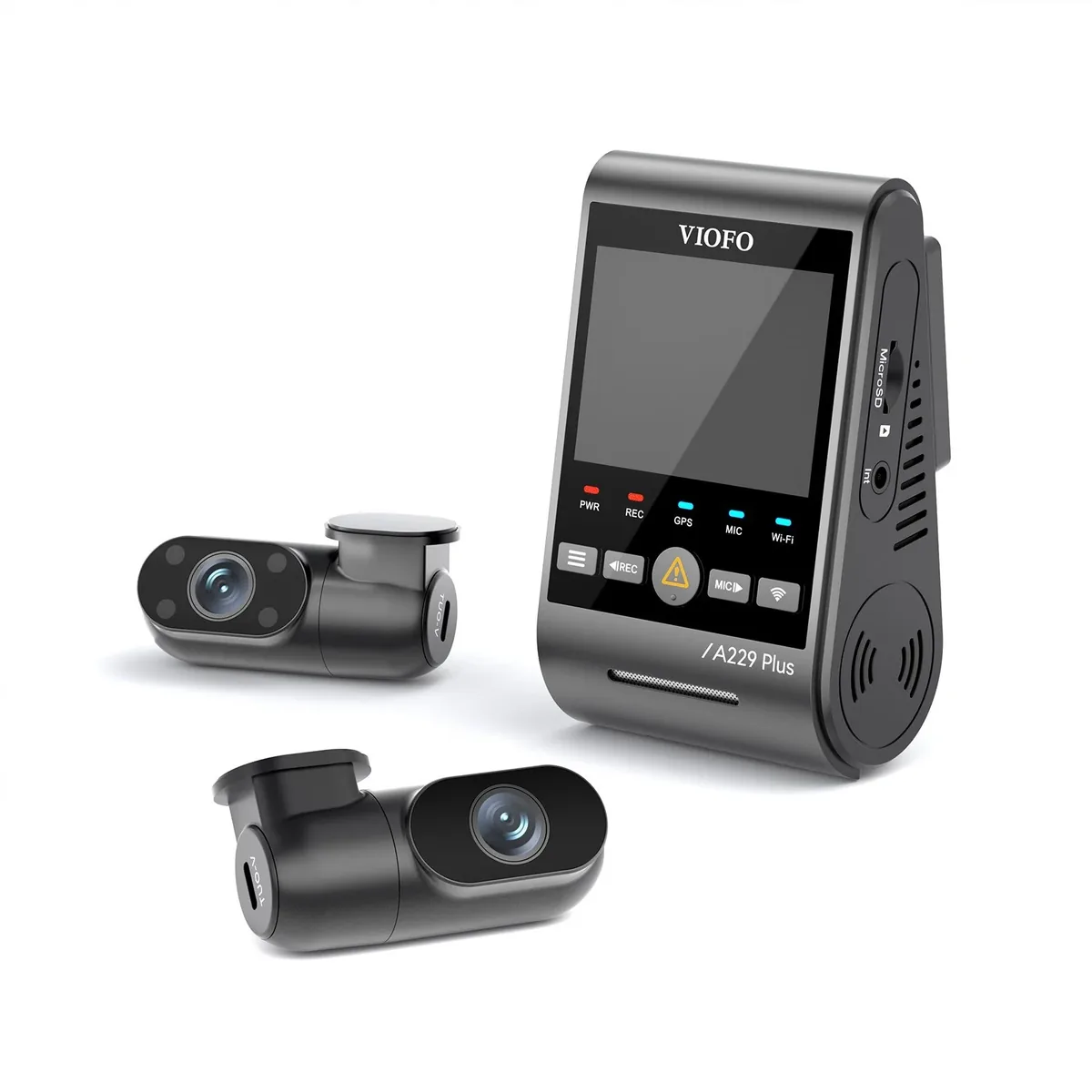
Viofo A229 Plus 3CH
- Front px/°
- 18.3
- Front
- 1440p/60
- 140° lens
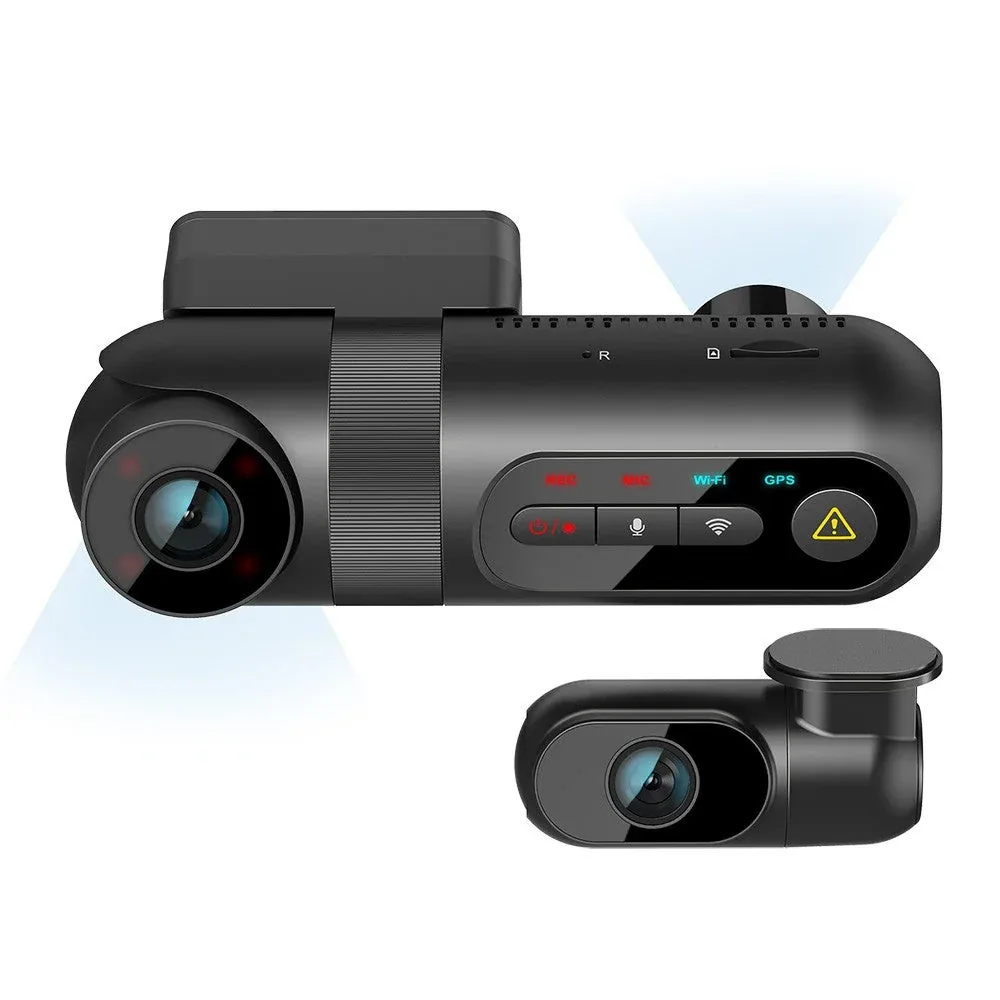
Viofo T130 3CH
- Front px/°
- 18.3
- Front
- 1440p/30
- 140° lens
Rove R3
- Front px/°
- 17.1
- Front
- 1440p/30
- 150° lens